
Navigating the Dynamic Landscape of Digital Marketing: Insights from Professionals


The digital marketing industry hit roughly $531B in 2022 and is on track for $807B by 2026 — but headline spend is the noisy variable. The signal is what marketers report is hardest. In HubSpot's 2026 State of Marketing survey, 61% of respondents call AI the biggest marketing disruption in twenty years, while 93% of AI Mode searches end without an external click. Spending is up; the link between spending and traffic is fraying.
This is a digital marketing trends piece for 2026, but the framing matters: every trend below either changes a measurement question (what counts now?) or breaks an inherited workflow (what stopped working?). I will name tools specifically. I will flag where stated-preference survey data is being treated as causal evidence. And I will close with one measurement change you can ship this Monday — not a six-trend roadmap.
Trend 1: The Trend Is Personalisation, Not Volume
E-commerce operators reading this already know the punchline: scaling channel volume in 2026 hits the same diminishing-returns curve as 2024, only steeper. The interesting variable is personalisation depth. HubSpot's 2026 survey reports that 75% of consumers are more likely to buy from brands delivering personalised content, and 93% of marketers say personalisation lifts leads or purchases.
Read that 93% number carefully. It is self-reported marketer perception, not an A/B-tested incremental lift number — which is to say, it tells you what marketers believe, not what the holdout proved. The directional read is real. The magnitude is not. If your team is writing a personalisation business case off the 93% figure alone, you are walking into a board meeting with a stat that does not survive a five-minute methodology question.
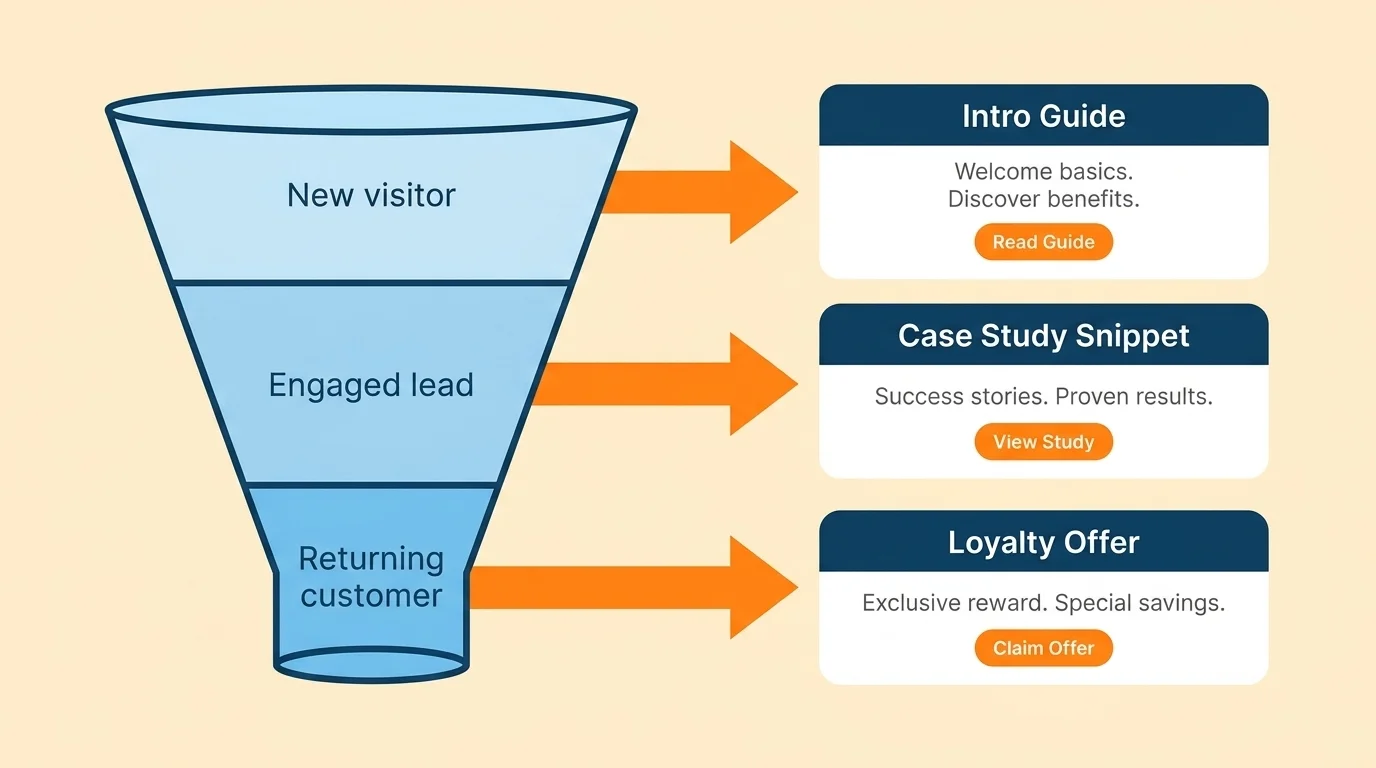
A cleaner read: personalisation works, and the marginal return on the second segment is much larger than the marginal return on the eighth. Start with three segments — new visitor, engaged lead, returning customer — instrument first-party events into the CRM, and only then layer behavioural personalisation. Anyone selling you twenty-segment dynamic personalisation as the entry point is selling complexity, not lift.
Trend 2: Customer Journey Personalisation Without the Survey Theatre
The phrase "customer journey personalisation" is one of the few keyword clusters where US search interest is up roughly 767% from a low base over the past year — small absolute volume, real underlying intent. The discipline behind the phrase has not kept up with the search interest.
Most personalisation programmes I have audited do one of two things. Either they segment on stated preferences (form fields, survey responses) and treat the resulting segments as causal — which they are not, because anyone willing to fill out a preference form is already self-selected into a higher-engagement cohort. Or they segment on behavioural events (page views, cart events, email clicks) without controlling for traffic-source mix, and end up "discovering" that paid-social-traffic visitors convert at a different rate than organic visitors — which is true and uninteresting, because that gap was always there.
The cleaner build: pick one outcome metric (90-day repeat purchase rate, ideally), define three behavioural cohorts at session start, ship one variant per cohort, and run the experiment for a fixed period before claiming a win. The most expensive personalisation metric is the one that is right but meaningless — the lift number that does not control for the cohort difference that produced it.
Trend 3: Marketing Automation, Stack Comparison Edition
47% of marketers leverage automation to make their processes more efficient. The other 53% are not lagging — they are usually the ones with the cleanest data, and they are waiting because they have learned that an automation tool layered on top of a broken segmentation model just automates the broken segmentation faster.
The named-tool question matters because most published comparisons skip it. The decision shape, in plain language:
- HubSpot Marketing Hub — strongest pick for SMB B2B with CRM-first workflows. Native CRM integration is the moat; the trade-off is unit cost at scale.
- ActiveCampaign — mid-market multi-channel automation with deeper customer-journey logic than HubSpot at a lower price point. Less elegant CRM, more powerful automation primitives.
- Customer.io — developer-led product workflows. If your automation logic depends on event payloads from your application, this is the choice. Marketers who are not comfortable with API-driven event design will struggle.
- Klaviyo — ecommerce-first email and SMS, deep Shopify and BigCommerce integrations. Built for product-catalogue-aware messaging.
The decision is not feature checklists. It is data integration depth, channel mix, and team composition. A team with a strong RevOps engineer can extract more value from Customer.io than from HubSpot; a team without one cannot. The CPC on this keyword in our category is over $66 — the search behaviour around it is buyer-shaped, not browser-shaped, which is why most published comparisons are vendor-pushed.
Trend 4: AI Moved From Experiment to Baseline — and 42% Are Still Stuck in Pilot
By 2026, 80% of marketers use AI for content creation and 75% use it for media production. The headline is that AI adoption is no longer the differentiator. The under-reported number is the one alongside it: 42% of marketers using generative AI still classify their approach as "initial testing," and 30% take a month or longer to onboard a new AI tool.
That gap between adoption and operational maturity is where most of the productivity lift is being lost. A team adopts an AI summarisation tool, reports a "30% productivity lift" at the next all-hands, and the lift turns out to be self-reported survey data with no holdout. The clean read requires either a randomised assignment (half the team gets the tool for a fixed window) or a synthetic control matched on pre-period output. Almost no team is doing this. Almost every team is reporting the lift anyway.
The authenticity counter-trend is worth flagging here, because it shows up in the same datasets. Brandwatch and Kantar both report consumer fatigue with over-polished AI-generated content; HubSpot's 2026 survey separately notes that short-form video is the highest-ROI content format at 49%, and short-form video is the format least amenable to AI substitution. Read together: AI gives you scale on the low-effort end of the content stack, while raw, human, IRL formats hold the conversion-driving end. The marketers winning in 2026 are not "AI marketers" — they are marketers who can pick the right tool for the right point on the funnel and audit the holdout when somebody claims a lift.
Trend 5: LLM-Powered Chatbots Are Conversion Drivers Now
The 2024 chatbot conversation was about deflecting support tickets. The 2026 chatbot conversation is about converting high-intent traffic before it leaves the site, and the category has split cleanly into two buckets that should not be confused.
Rule-based bots — scripted FAQ responders, decision-tree menus — are now the underperforming half of the category. The LLM-powered alternatives (Intercom Fin AI, HubSpot Breeze, Drift's GPT integration, Tidio's LLM tier) accompany users through full decision flows and answer questions the script never anticipated. The shift is not cosmetic. ChatGPT alone has roughly 800 million weekly users, and 87.4% of all AI referral traffic to publishers comes from ChatGPT — meaning users are arriving at sites already conditioned to expect a conversational, free-form interface. A scripted bot reads as broken to that user.
The measurement angle: chatbot programmes are usually evaluated on deflection rate (tickets resolved without escalation), which is the wrong metric for an LLM-powered bot deployed on high-intent pages. The right metric is incremental conversion — does the page convert at a higher rate when the bot is enabled vs disabled, in a randomised test? Almost no team is running that test. Most are reading deflection numbers and concluding the LLM bot "works," which it might, but not in the way the dashboard is reporting.
Trend 6: Surviving the Gmail/Yahoo Sender-Authentication Era
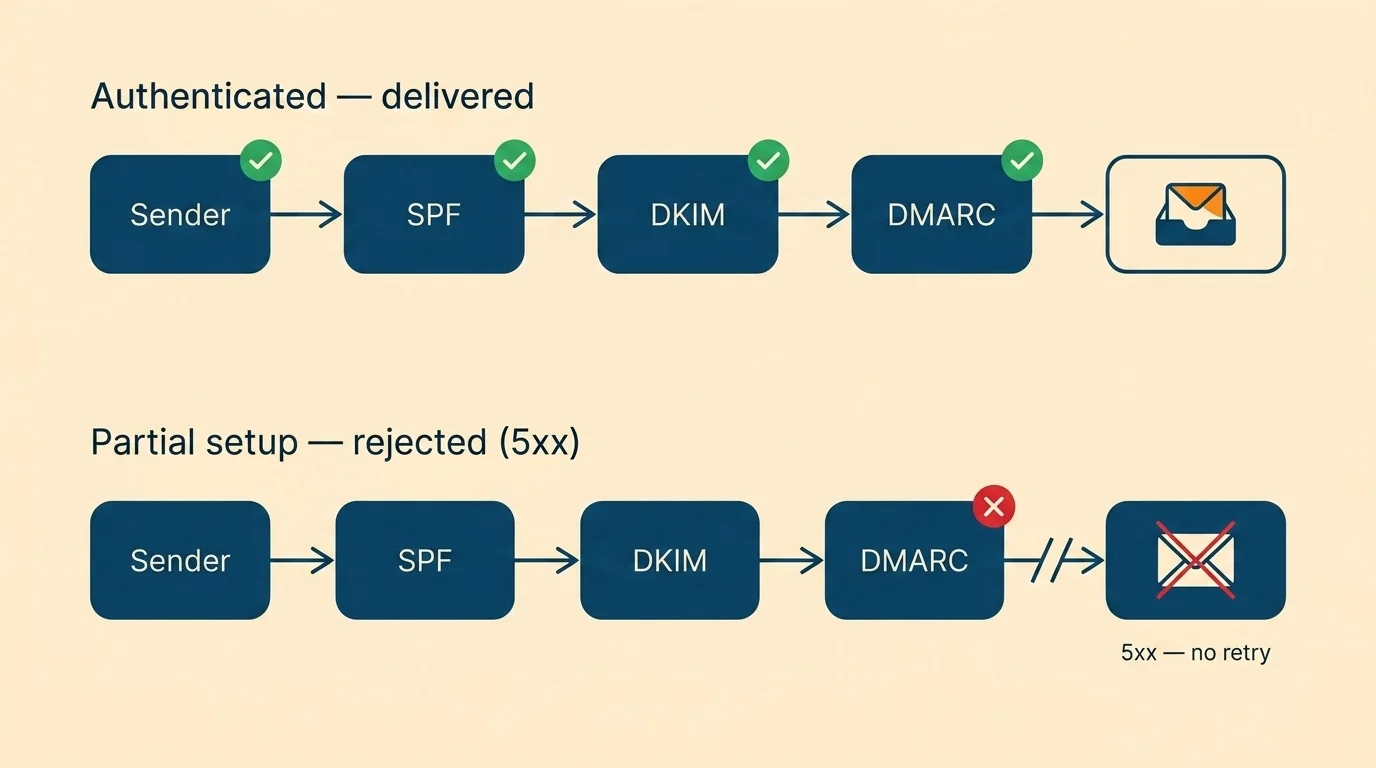
If you send 5,000+ emails per day to personal addresses, Gmail and Yahoo's bulk-sender requirements now demand SPF, DKIM, and DMARC authentication, a spam complaint rate under 0.3%, and one-click unsubscribe via RFC 8058. The rules launched February 2024 as a soft rollout; in November 2025 Gmail moved to permanent 5xx rejections — meaning a misconfigured authentication header now fails permanently rather than retrying.
The under-reported consequence: a meaningful share of teams set up SPF and DKIM correctly years ago, never set up DMARC, and have been delivering through a soft-failure window for the last year. Those teams are now seeing inexplicable open-rate drops and treating them as creative-fatigue when the actual cause is authentication-failure routing into spam. Audit your DMARC alignment before you audit your subject lines.
The segmentation lift is the other piece of the email story worth pricing in. Segmented campaigns drive roughly 30% more opens and 50% higher clickthroughs than unsegmented ones. That stat is the closest thing to a defensible benchmark in email marketing — it is consistent across studies, it is consistent across verticals, and the holdout construction is at least specified. Most teams are still sending the same broadcast to their full list and wondering why engagement is down. Engagement is down because the underlying attention budget shrank; segmentation is how you allocate the smaller budget to the right cohorts.
Trend 7: SEO in the AI-Answer Era (Generative Engine Optimisation)
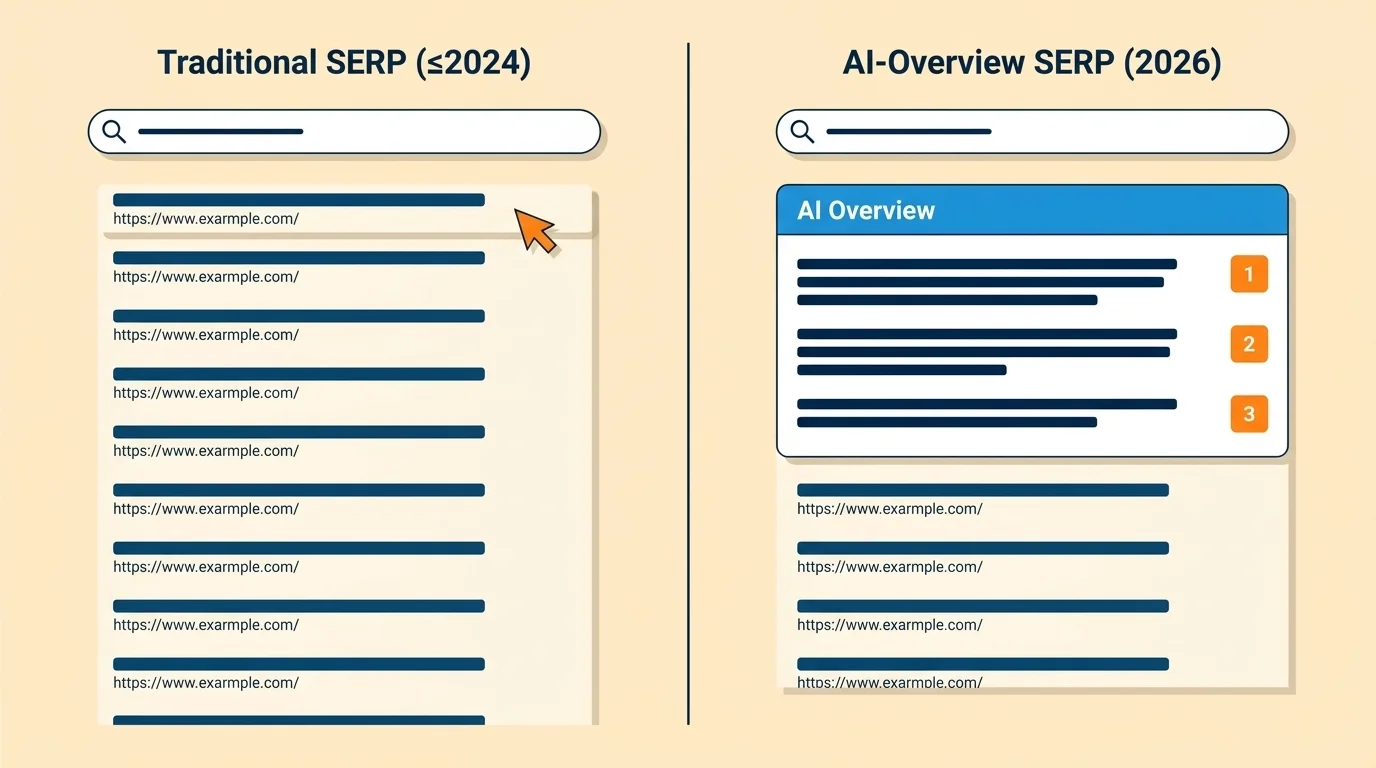
This is the section where most digital-marketing-trends articles are still living in 2022. Search engine optimisation as a discipline is not dead, but the ranking-position-as-traffic-driver assumption that anchored SEO for two decades has fractured. The numbers are unambiguous.
93% of AI Mode searches end without an external click (Semrush, September 2025). Organic CTR fell 61% year-over-year for queries that trigger AI Overviews (Seer Interactive, November 2025). And the inverse: brands cited inside AI Overviews see 35% higher organic CTR than uncited peers on the same SERP. The win condition has shifted from ranking position to citation extraction.
The discipline emerging around this is Generative Engine Optimisation — GEO — and its tactics are different enough from classic SEO that they deserve their own playbook. The empirical patterns from 2025-2026 citation studies:
- Freshness matters more than it used to. 85% of AI Overview citations come from content published in the last two years. A flagship piece from 2019 that ranks #1 organically may not get cited at all in the AIO panel above it.
- Structured data is citation-bait. Pages using three or more comparison tables earn 25.7% more AIO citations on comparison-intent queries. Tables are easy for LLMs to extract; prose is not.
- Long-form depth correlates with citation count, but not in the way most teams build it. Pages above 20,000 characters average 10+ citations vs roughly 2 for shorter content — but those citations come from clear, factual, paragraph-discrete claims, not from padded word counts.
- Voice and conversational search are part of the same shift. 157M+ Americans are projected to use voice assistants for search by end of 2026 — and voice search and AI-answer search converge on the same content patterns: clear primary-claim sentences, structured FAQs, named-entity coverage.
The honest framing of "is SEO dead": no, but the metric you should be reporting on changed. Stop reporting ranking position alone. Start reporting AIO citation rate per target query, and treat that column as the leading indicator of the next quarter's organic conversion volume.
What you can ship this Monday
The seven trends above land on the same underlying problem: most marketing dashboards are still answering the questions that mattered in 2022 (rank position, deflection rate, broadcast open rate, AI adoption rate) rather than the questions that decide budgets in 2026 (AIO citation rate, incremental conversion lift, authenticated deliverability rate, AI productivity lift under holdout).
You are not going to rebuild the dashboard this quarter. But you can pick one experiment to ship this Monday: log AIO citation rate for your top 25 ranking queries this week, baseline it, and re-measure it monthly. That single column — "appeared in AIO" next to your existing ranking column — gives you the missing variable in every other measurement question downstream. It costs nothing. It takes an afternoon. And once it is running, you will know within a quarter which of these seven trends is actually the one biting your organic-conversion line.
Pick one. Ship it. Re-measure. The rest is just trend coverage.
Frequently Asked Questions
AI moving from experimentation to baseline (61% of marketers call it the biggest disruption in 20 years), Generative Engine Optimization replacing classic SEO as AI Overviews capture 93% of zero-click searches, LLM-powered chatbots converting customers (not just answering FAQs), Gmail/Yahoo enforced sender authentication, and a return to authentic, human-led content as audiences tune out polished AI output.
GEO is the practice of optimizing content so AI assistants like Google AI Overviews, ChatGPT, and Perplexity cite you when answering user questions. Unlike traditional SEO that targets blue-link rankings, GEO targets AI citation. Tactics include: publishing fresh content (85% of AI citations come from work under 2 years old), using structured tables (pages with 3 tables earn 25.7% more citations), and writing in clear, factual paragraphs that LLMs can extract.
AI is now foundational rather than experimental. 80% of marketers use AI for content creation, 75% for media production. The competitive edge has shifted from 'do you use AI' to 'how well do you blend AI execution with human strategy and storytelling.' Winners use AI for scale and personalization, then layer human creativity and brand POV on top.
For SMB B2B with strong CRM needs, HubSpot Marketing Hub. For mid-market multi-channel automation, ActiveCampaign. For developer-led product workflows, Customer.io. For ecommerce-first email and SMS, Klaviyo. The right tool depends on data integration depth, channel mix, and team size — not feature checklists.
Yes, but the category has split. Rule-based bots (scripted FAQ responders) underperform. LLM-powered conversational agents (Intercom Fin AI, HubSpot Breeze, Drift's GPT integration) now guide customers through full decision flows and act as conversion drivers. Deploy them on high-intent pages, train them on your knowledge base, and monitor handoff quality.
If you send 5,000+ emails/day to personal accounts, you must authenticate with SPF, DKIM, and DMARC, keep spam complaints under 0.3%, and offer one-click unsubscribe (RFC 8058). Rules launched February 2024, but Gmail began permanent 5xx rejections (no retry) in November 2025 — partial setups now fail.
Use first-party data (CRM, on-site behavior, purchase history) to segment audiences by intent stage, then deliver tailored content via your automation tool. 75% of consumers prefer personalized content, and 93% of marketers report it lifts leads or purchases. Start with three segments (new visitor / engaged lead / customer) before expanding.
No, but the metrics changed. Organic CTR is down 61% YoY for queries with AI Overviews, and 93% of AI Mode searches end without a click — but brands cited inside AI Overviews see 35% higher CTR than uncited peers. The new goal is being the source AI cites, not just ranking #1.