Video Marketing Evolution: Engaging Audiences in the Digital Era


A video marketing strategy in 2026 isn't one strategy; it's a portfolio. 91% of businesses now use video as a marketing tool — a joint all-time high — and 93% of video marketers say it's an important part of their overall strategy. 82% report a good ROI from video, 85% of people have been convinced to buy after watching a video, and 89% of consumers say video quality affects their trust in a brand. The "evolution" the older version of this article gestured at has, in fact, happened — and what's emerged isn't one big video strategy but four overlapping ones running in parallel: short-form vertical for reach, AI-assisted production for volume, shoppable and CTV for conversion, and live commerce for community.
This guide works through the 2026 video marketing strategy as it actually exists in production: which format does what, which tools shipped (and which one didn't make it past spring), how to measure across the four sub-disciplines, and where small teams should start.
Storytelling: still the foundation, with named examples
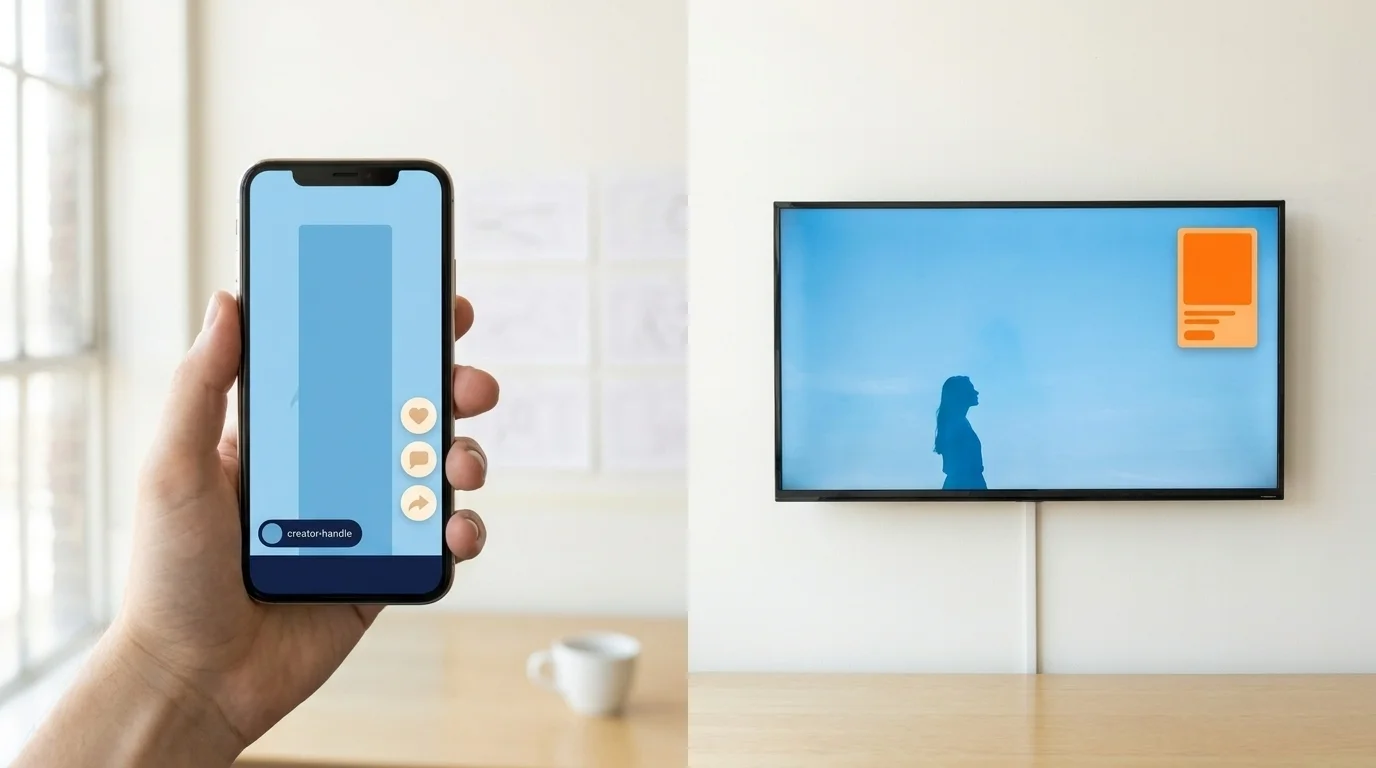
Storytelling hasn't gone out of fashion; it's gone vertical. The brands that hold up across the changes — Dove's "Real Beauty" through years of iterations, Apple's "Shot on iPhone" running for over a decade in different aspect ratios, Airbnb's "We Accept" — share a structural discipline: a clear emotional premise, a recognisable visual signature, and the willingness to reshape the same idea for whatever format the moment requires.
What's changed in 2026 is which formats are doing the work. Dove still runs long-form film for brand moments. Apple's vertical-native iPhone reels are the workhorse. The newer reference set — Duolingo on TikTok turning a green owl into a brand character through a sustained voice; GoPro running on creator-submitted footage; Ryanair leaning into irreverent short-form on TikTok; Notion using long-form YouTube tutorials to anchor SEO and product education — covers the spread of what storytelling looks like when the playbook is platform-shaped rather than format-shaped.
The discipline the persona-driven brands share: they treat the platform like a constraint, not an afterthought. The Duolingo TikTok voice doesn't work on a 30-second TV spot. The "Shot on iPhone" gallery doesn't work as a 9:16 quick-cut. The strategic question isn't "what's our brand video?" anymore. It's "what's our brand on TikTok, and is that the same brand on YouTube?"
The short-form playbook: TikTok, Reels, and Shorts
Short-form vertical video is the dominant format in 2026 and the one most marketing teams still under-invest in. 85% of marketers say short-form is the most effective social format and short-form delivers the highest ROI (21%); global short-form ad spend hit $111B in 2025 with a projected CAGR of 9.52% to $145.8B by 2028.
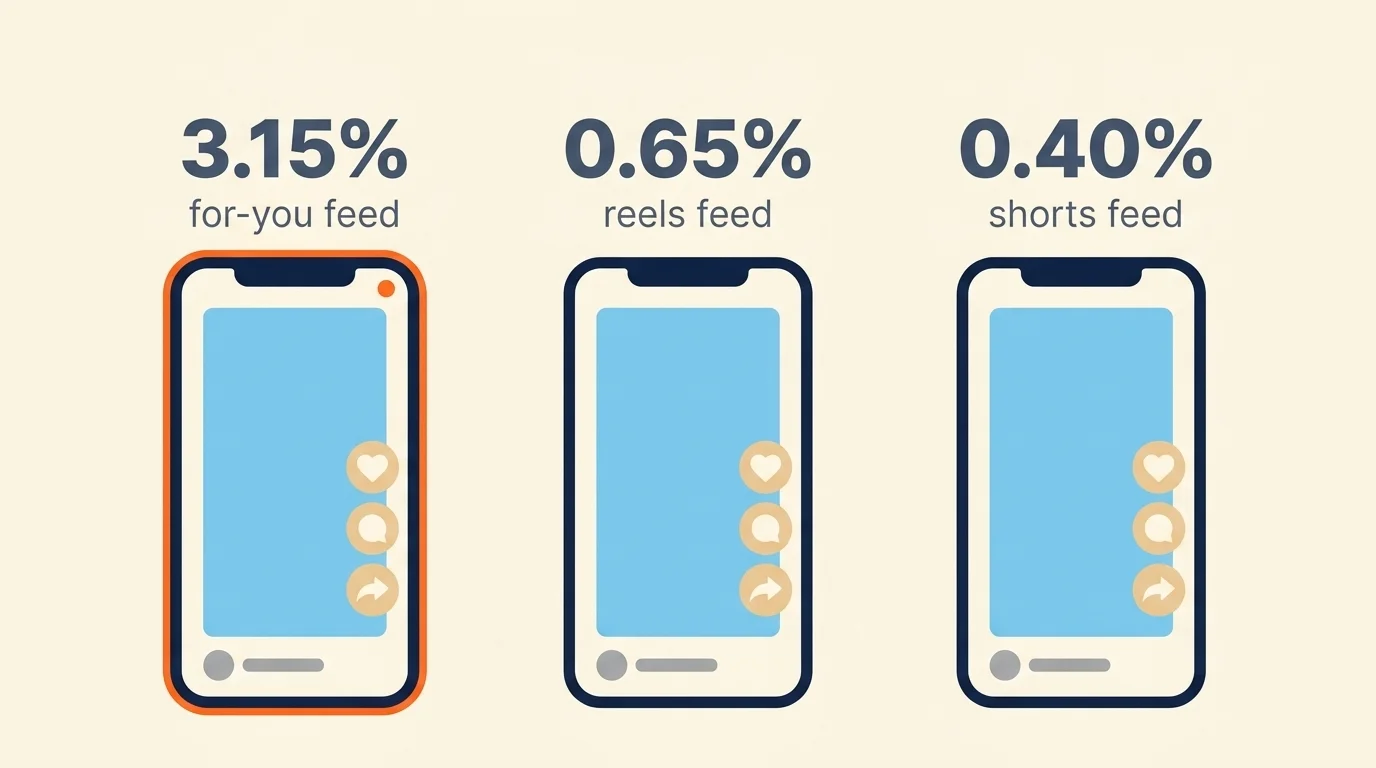
The three platforms are not interchangeable. Engagement rate, market share, and viewer behaviour all diverge:
| Platform | 2025 engagement rate (typical) | 2025 attention market share | Notes |
|---|---|---|---|
| TikTok | ~3.15% (up from ~2.80% in 2024) | ~40% | Highest engagement; strongest creator economy |
| Instagram Reels | ~0.65% | ~20% | Lower engagement, broader reach for established brands |
| YouTube Shorts | ~0.40% | ~20% | 200B+ daily views, up from ~70B a year prior; fastest-growing by volume |
Sources: AutoFaceless 2026 short-form statistics report.
The practical implication. A 2026 short-form programme is not "post the same vertical clip to all three platforms". It is: native-shot or natively-edited TikToks for the engagement-led, voice-driven part of the brand presence; Reels for the established-audience reach play and shop-tag commerce; Shorts for the SEO-aware version of the same content (Shorts get pulled into long-form YouTube discovery, which is increasingly where the conversion side lives). 63% of consumers prefer a short video over articles or webinars to learn about a product, and 71% say 30-second to 2-minute videos are most effective — the sweet spot for most short-form is closer to the longer end of that range than the older "under 15 seconds" rule of thumb that the platforms briefly favoured.
The short-form playbook that holds up in 2026: pick one platform as the primary, build creative for it natively, and use the others as repurposing surfaces with platform-appropriate edits rather than parallel primary investments.
AI in video marketing: the post-Sora landscape
The single largest change between the 2024 and 2026 versions of this guide is that AI video production stopped being a curiosity and became a default capability. 63% of video marketers used AI video tools in 2026, up from 51% in 2025. Wistia's State of Video 2026 reports that AI users are 58% more likely to ship video daily than non-AI users, and 85% of marketers say videos with AI elements (captions, effects, AI-generated b-roll) outperform those without.
The vendor landscape briefly looked like it would be settled around OpenAI's Sora. Then it wasn't. OpenAI shut down Sora's web and mobile app on April 26, 2026, with the API following on September 24, 2026 — a closure attributed publicly to economics that didn't work out. The teams that had built on Sora redirected; the 2026 stack that emerged afterwards consolidated around three primary models with different strengths.
| Tool | Strength | When to reach for it |
|---|---|---|
| Runway Gen-4 Turbo | Brand-consistent character and shot generation | Brand-led content where the same character must reappear across cuts |
| Veo 3.1 | 4K output with native audio + best prompt adherence | Narrative scenes, voiceover-led content; Lite tier $0.05/sec |
| Kling 3.0 | Up to 2-minute clip generation | Hero pieces that need length without stitching |
Sources: LaoZhang AI 2026 model comparison, Digital Applied 2026 AI video market analysis. Industry AI video adoption is up 300% YoY.
The rest of the production stack worth knowing:
- Descript for podcast-to-video conversion, voice cleanup, and edit-as-text workflow.
- Opus Clip for repurposing long-form video into platform-native short clips with auto-captions.
- CapCut for vertical-first mobile editing and template-driven Reels/TikToks.
The pattern most successful 2026 teams converge on is a 2-3 tool combination — usually one generative model (Runway/Veo/Kling), one repurposing tool (Opus Clip), and one editor (Descript or CapCut) — rather than betting an entire workflow on a single platform. Sora's closure made that diversification look prudent in retrospect.
Live video, reframed as live commerce
Live video as the early-Facebook "we'll do a Q&A every Thursday" model hasn't survived intact. What did survive is something more specific: a global live audience of 1.74 billion unique monthly viewers, with brands using livestream commerce, product launches, and influencer drops to drive real-time purchase behaviour. The fastest-growing slice is educational livestreaming, which grew 89% YoY to roughly 22% of all live viewership.
The B2B picture has shifted too. LinkedIn surpassed YouTube as B2B's primary video distribution channel in Wistia's 2026 dataset — 81% of teams now distribute on LinkedIn. LinkedIn Live and short-form LinkedIn video together have become the unexpected centre of B2B video for many programmes.
The 2026 live video playbook, in practical terms:
- Live commerce on TikTok and Instagram for impulse-purchase categories (beauty, accessories, snacks).
- Live product launches on owned platforms with a dedicated streaming layer, often with embedded polls and Q&A modules.
- Educational livestreams on YouTube and LinkedIn for considered B2B sales.
- Live AMAs and behind-the-scenes for brand-affinity reinforcement with established audiences.
The framing has moved from "live video as broadcast" to "live video as transaction or relationship". The teams getting the lift are clear which one they're doing on a given stream.
YouTube SEO and video discoverability
The 2024 version of this article had a "video SEO" section. In 2026, the substance of that section is mostly YouTube SEO — the keyword is bigger, the platform is bigger, and the discovery mechanism is meaningfully different from web SEO. "youtube seo" sees roughly 4,400 monthly searches, KD 40, and the platform is the second-largest search engine on the web.
The YouTube SEO discipline in 2026:
- Title with primary keyword in the first 60 characters, written for human curiosity rather than keyword stuffing.
- Description first 150 characters mirroring the title's intent plus a one-line value proposition; this is what surfaces in search previews.
- Chapters for any video over four minutes — they create timestamped jump links inside Google search results too, not just on YouTube.
- Thumbnail with high contrast, recognisable face or subject, and minimal text. Thumbnail CTR is still the single largest determinant of impression-to-view conversion.
- Closed captions (auto-generated, then edited) for accessibility, multilingual reach, and SEO crawlability. 90% of teams now take active steps to make video accessible, captions being the most common starting point.
- End screens and playlists to extend session watch time, which is the most important ranking signal YouTube weights.
- Comments engagement in the first 24 hours — the algorithm reads comment velocity as an interest signal.
For non-YouTube video SEO (Google web video carousels, web embeds), the basics still apply: VideoObject schema markup, hosted video with a transcript on the page, a clear video sitemap. But the bulk of where 2026 video discovery happens is YouTube or platform-native, not generic web video SEO.
Shoppable and CTV: the new conversion channel
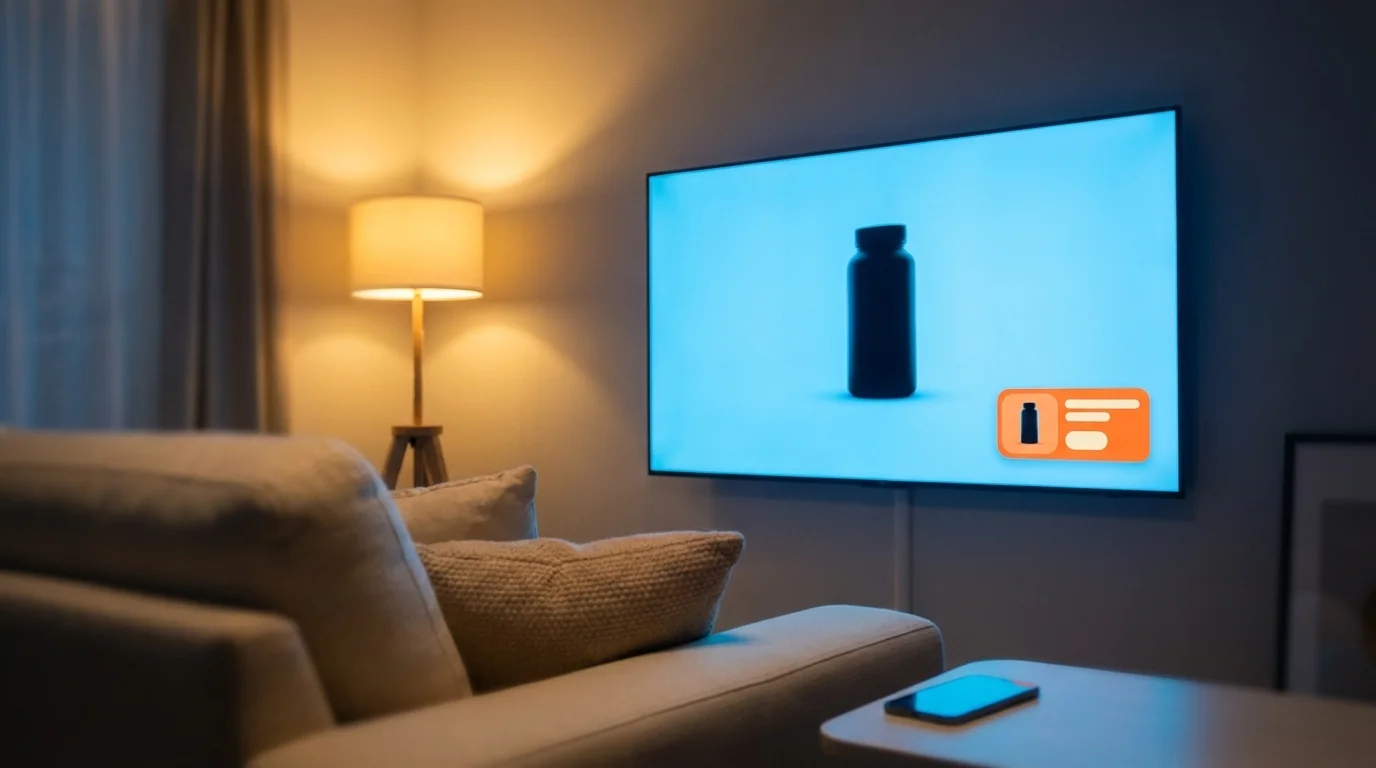
This category did not exist meaningfully two years ago and is now where a meaningful share of conversion-driven video lives. Interactive shoppable ads will represent 10% of all CTV ads by 2026, and shoppable video ad formats are growing 94% YoY in Fortune 500 adoption. The economics: shoppable CTV ads convert 5x better than standard video, CTV completion rates exceed 95%, and US CTV ad spend reaches $37.95B in 2026 (+14.5% YoY), forecast to clear $52.5B by 2029.
The practical shape of shoppable video in 2026:
- Shoppable in-feed video on social — TikTok Shop, Instagram Shopping, Pinterest. In-content tappable product cards converting on-platform.
- Shoppable PDP video on owned commerce sites — product detail pages with in-video product cards driving 3x conversion of static-image equivalents.
- Shoppable CTV — interactive overlays on connected-TV ads (Roku, Hulu, Disney+, Amazon Fire) that let viewers add to cart from the second screen.
- AR product try-on as an adjacent format — particularly for beauty, eyewear, and apparel.
CTV CPMs sit around $35 versus roughly $20 for mobile video; the conversion premium justifies the price for considered-purchase categories. For lower-AOV impulse buys, in-feed shoppable on social retains the cleaner economics.
2026 video marketing trends, briefly
Five trends that have moved from "watch this space" to "operating reality" in the past twelve months:
- Short-form dominance continues — TikTok, Reels, and Shorts now carry the bulk of new audience acquisition for most B2C brands.
- AI-generated and AI-edited creative crossed the majority threshold — 63% of video marketers use AI tools, 86% of buyers plan to use generative AI for video ad creative, and GenAI is projected to reach 40% of all ads by 2026.
- Customer testimonial video is the fastest-growing category — climbing from 17% of company plans in 2023 to 47% in 2026.
- CTV and shoppable have collapsed the funnel — awareness and conversion now sit in the same ad unit.
- LinkedIn has become the dominant B2B video channel at 81% distribution share.
76% of companies now make at least one video monthly, and 40% plan to increase video budgets in 2026. The category is still expanding, not consolidating.
Video analytics: the framework that replaces "video performance"
"Video performance" has never been a useful metric on its own. The framework worth running in 2026 is a funnel-mapped one:
Awareness layer — impressions, view-through rate, completion rate (CTV averages above 95%; social short-form sits at 40-70% depending on platform and format), CPM by channel.
Engagement layer — average view duration, audience retention curve (the shape of where viewers drop off, by second), social engagement (likes, comments, shares, saves), and increasingly the saves and shares metric specifically, which is the strongest signal of "content worth re-finding" that Wistia 2026 flags as the fastest-rising success metric.
Conversion layer — click-through rate, conversion rate, attributed revenue, and shoppable interaction rate (taps on in-video product cards, per impression). For paid CTV, also the household-level reach overlap with paid digital, since CTV viewing is shared.
The discipline is mapping each video asset to the layer it's supposed to serve, then measuring against the right metric for that layer. A brand storytelling piece evaluated on conversion rate looks like a failure; the same piece evaluated on completion rate plus brand-lift survey is a different story.
Where small teams should actually start
Closing with the question most teams reading this are quietly asking. The realistic tier ladder for a 2026 video marketing programme:
- $0 / month — CapCut (mobile-first editing), Canva (thumbnails, simple animation), one platform-native short-form output (pick one of TikTok/Reels/Shorts).
- ~$500/month — add Descript (for editing, transcripts, repurposing) and Opus Clip (for long-form to short-form repurposing). One short-form platform plus YouTube long-form.
- ~$5K/month — add Wistia or Vimeo hosting, freelance editor time, one AI generative tool (Runway or Veo), and start a paid short-form testing budget.
- $25K+/month — full multi-platform short-form, paid amplification, AI generative pipeline, CTV ad spend, and a video analytics layer integrated with the CRM.
The temptation at every tier is to try to do everything one tier up. The 2026 reality is that a smaller programme done well — one short-form platform, one anchor format, one repurposing pipeline — outperforms a larger programme done thinly across five surfaces. Video is a craft; pick the craft you can ship, ship it weekly, and add the next tier when the current one is genuinely working.
Frequently Asked Questions
Short-form vertical video now drives the highest engagement (TikTok ~3.15%, Reels ~0.65%, YouTube Shorts ~0.40%), AI video tools have crossed majority adoption (63% of marketers, up from 51%), and shoppable/CTV video is converting 5x better than standard formats. Expect short-form, AI-generated creative, and live commerce to dominate budgets — 76% of companies now make at least one video monthly and 40% plan to increase video budgets in 2026.
Short-form (15-90s) wins on engagement and discovery: 63% of consumers prefer short videos to learn about a product, and 71% say 30-second to 2-minute clips are most effective. Long-form (testimonials, webinars, tutorials) still wins on conversion and B2B trust. The right answer is a content stack: short-form for top-of-funnel reach, long-form for mid- and bottom-of-funnel proof.
With OpenAI's Sora discontinued in April 2026, the practical stack is: Runway Gen-4 Turbo for brand-consistent shots, Veo 3.1 for narrative scenes with native audio (Lite tier $0.05/sec), and Kling 3.0 for hero clips up to 2 minutes. For repurposing long videos into Shorts/Reels/TikToks, Opus Clip and CapCut lead. Most successful teams use a 2-3 tool combo rather than betting on a single platform.
Roughly half of marketers allocate a third of their marketing budget — or less — to video. A practical small-business tier sits at $0-500 per month using CapCut + Canva + Opus Clip; a growth tier at ~$2-5K per month adds Descript, Wistia hosting, and freelance editors; an enterprise tier ($25K+) layers in Runway or Veo subscriptions and CTV ad spend. CTV CPMs average $35 vs $20 for mobile video.
Map metrics to the funnel. Awareness: impressions, view-through rate, completion rate (CTV averages above 95%). Engagement: average view duration, audience retention curve, social engagement — saves and shares are the fastest-rising success metric per Wistia 2026. Conversion: CTR, conversion rate, attributed revenue, and shoppable interaction rate. Match each asset to the funnel layer it's supposed to serve and measure against the metric that fits.