Guerilla Marketing Examples


Every marketer I speak to in 2026 is running the same losing race: budgets shrink, attention costs more, and buying reach through paid media gets more expensive every quarter. The best guerrilla marketing examples are a way out of that race, and they do not win by outspending anyone — they win by being the most inventive with the least. That is not a growth hack; it is a discipline, and it happens to be the same discipline as sustainable marketing: earning attention with creativity rather than with ad-spend and material waste. What follows is a curated set of fifteen real campaigns — the 2025–2026 flagships plus the classics still worth studying — each with the stunt, why it actually worked, and what it earned. Then a plain guide to running one yourself, low-waste, on under $500. Two things you will not get from the recycled listicles: an honest, sourced accounting of the returns instead of a number everyone quotes and nobody can trace, and a frame that treats restraint as a feature rather than a compromise.
Guerrilla Marketing Is Sustainable Marketing in Disguise
Let me state the thesis plainly, because it is the reason this piece exists rather than being the sixteenth identical gallery. Guerrilla marketing and sustainable marketing are the same discipline seen from two angles. Both win attention by being clever rather than loud, and both, done properly, spend as little as possible on media and on materials. The canonical definition — low-cost and unconventional — is worth restating as low-resource and low-footprint: reusable installations over disposable print, projection and chalk over billboards, an experiential moment over a landfill of handouts.
I am not romanticising thrift. A stunt that is clever for its own sake does not work; as one 2026 roundup put it, the best campaigns reinforce the brand message rather than being clever for clever's sake. The invention has to point somewhere, or you have bought a moment of attention and aimed it at nothing. So every example below is judged on ingenuity-per-dollar, not spectacle-per-dollar — what the idea earned relative to what it cost both the budget and the environment. And where the internet hands you a tidy ROI multiple, I will show you where that number comes from, because a return you cannot source is not a return; it is a rumour. You will find more of this lens in the sustainable marketing category.
What Is Guerrilla Marketing?
Guerrilla marketing is any unconventional, low-cost tactic that creates surprise and word-of-mouth buzz instead of buying attention through traditional paid media.
The term was coined by Jay Conrad Levinson in his 1984 book, born from small businesses that had to out-think bigger advertising budgets rather than match them. The distinction that matters is earned attention versus bought impressions: traditional advertising rents a space and fills it, while guerrilla marketing engineers a moment people choose to pass on. One note on spelling before we go further — guerrilla marketing (also spelled guerilla marketing) takes its name from the Spanish word for the small, mobile bands that gave the tactic its metaphor. The two-r spelling is the correct one, and the one to use if you want to be taken at your word.
What Are the 4 Types of Guerrilla Marketing?
The four types of guerrilla marketing are outdoor, indoor, event-ambush, and experiential — with ambient emerging as a fifth.
Outdoor
Street-level installations in public space: chalk, stencils, wrapped buildings, reworked street furniture. This is the lowest material cost of the lot when it works with what is already there rather than adding to it.
Indoor
Stunts staged inside a controlled space — a station concourse, a shop floor, a lobby — where the surprise lands on an audience that cannot easily look away.
Event Ambush
Borrowing the crowd of an event you did not pay to sponsor. Nike did exactly this around the Paris 2024 Olympics, wrapping the Centre Pompidou and covering the city with Mbappé imagery without being an official sponsor.
Experiential
An interaction the audience takes part in rather than watches. This is the type that travels furthest, because participation is the thing people actually share.
Ambient
The rising subtype: the message woven into the environment itself, from AR posters to street projection. It adds a digital layer and nothing physical to throw away, which is why it sits most comfortably in the sustainable lane.
Fresh Guerrilla Marketing Examples (2025–2026)
Start with the campaigns the recycled listicles have not caught up to yet — the flagships that show what the discipline looks like right now.
A24 — Marty Supreme
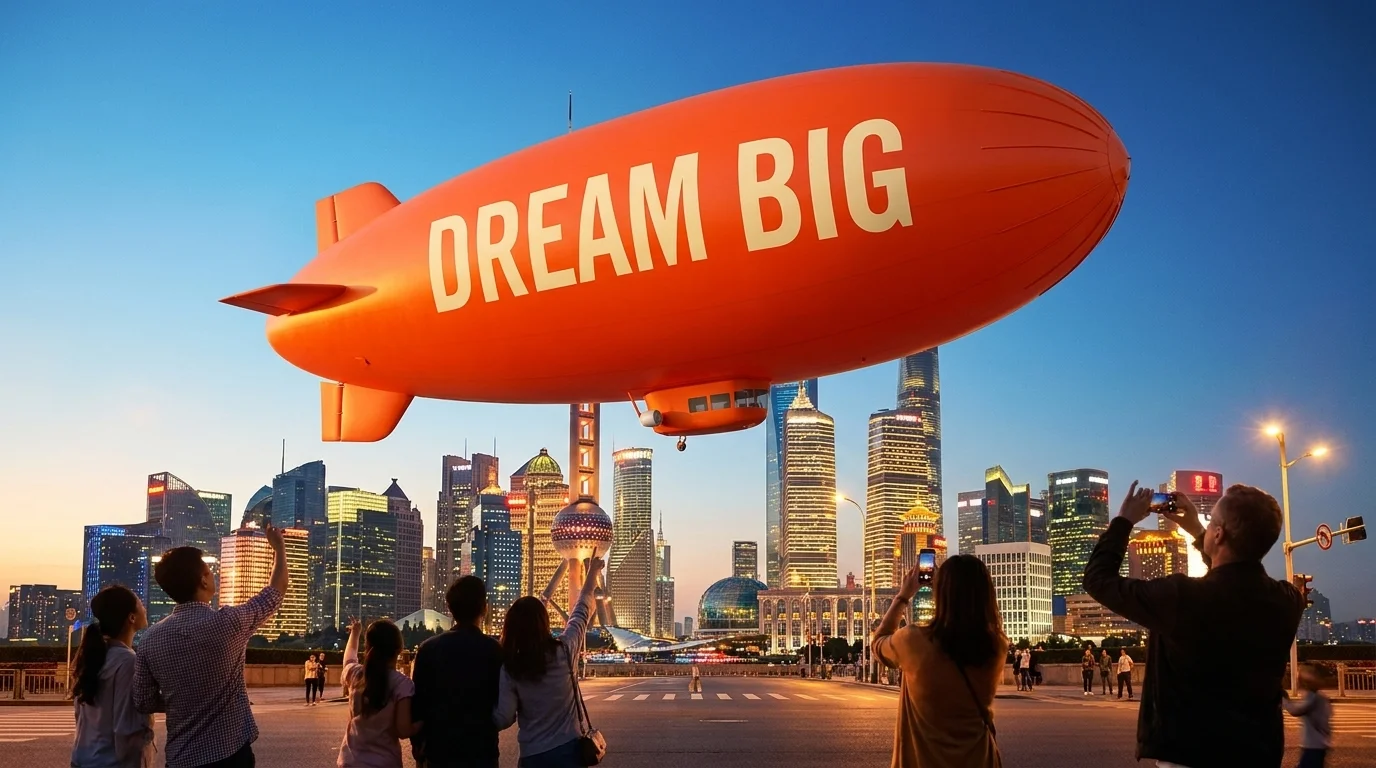
For its film Marty Supreme, A24 released an 18-minute "leaked" video of its star pitching absurd promotional ideas, then actually executed them: a 135-foot orange blimp reading only "Dream Big" over US cities, the Empire State Building lit orange, campaign imagery on the Las Vegas Sphere, and surprise pop-ups in Times Square. The meta "leak" plus the physical spectacle produced maximal earned media; presales hit a $145,933 per-screen average, the highest of 2025. The lesson is that the setup — the joke about the stunts — made the stunts worth watching.
Duolingo — the "Dead Duo"
In February 2025 Duolingo staged the death of its owl mascot. The launch post drew 144 million views on X in 24 hours and 1.7 billion impressions within two weeks. It worked because it married shock to participatory lore — the audience got to mourn, joke, and speculate — and every reaction was built to be shared. The company later reported sharp revenue and user growth, though that was not cleanly attributable to the stunt, and I would rather say so than imply a causation the numbers do not prove.
Graza — the "Missing" flyers
To promote an olive-oil potato chip, Graza put up lost-pet-style street flyers — "Missing Since March 2024" — with tear-off QR tabs leading to its newsletter. It is the low-waste exemplar of the set: near-zero print cost, a pattern-interrupt that made people stop, and a mechanic that turned a scrap of paper into a measurable sign-up. Nobody needed a blimp.
Nike — the Paris 2024 ambush
Nike owned the 2024 Olympics without paying to sponsor them, wrapping the Centre Pompidou and blanketing Paris with imagery of Mbappé. It is the event-ambush type at its most disciplined: claim the cultural moment, skip the sponsorship fee, and let the city's own attention handle distribution.
Tony's Chocolonely × Oxfam
For Glastonbury 2024, Tony's Chocolonely hid festival tickets inside chocolate bars sold through Oxfam. It is proof that guerrilla marketing suits the mission-driven lane: a surprise that generated buzz, routed money through a charity, and stayed entirely on-brand for a company whose whole positioning is ethical sourcing.
Spotify — Cosmic Playlists
Spotify leaned on astrology for a 2025 out-of-home play, matching star signs to playlists in a format built for people to photograph and post. It is the lightest example here — no installation to dismantle afterwards — and a reminder that the surprise can live in the idea rather than in the object.
Classic Guerrilla Marketing Campaigns Worth Studying
The essentials recur on every list for a reason: they are the clearest teaching cases. Here they are with the mechanic named.
- Blendtec — Will It Blend: the blender brand filmed itself blending an iPhone and earned 6 million YouTube views in five days on a $50 production budget — the canonical proof that creativity beats spend.
- Burger King — Whopper Detour: a nine-day geofenced app stunt that unlocked a one-cent Whopper near a rival's stores reportedly returned a 37:1 ROI — a named, sourced figure, which is exactly the kind of number I want you to demand.
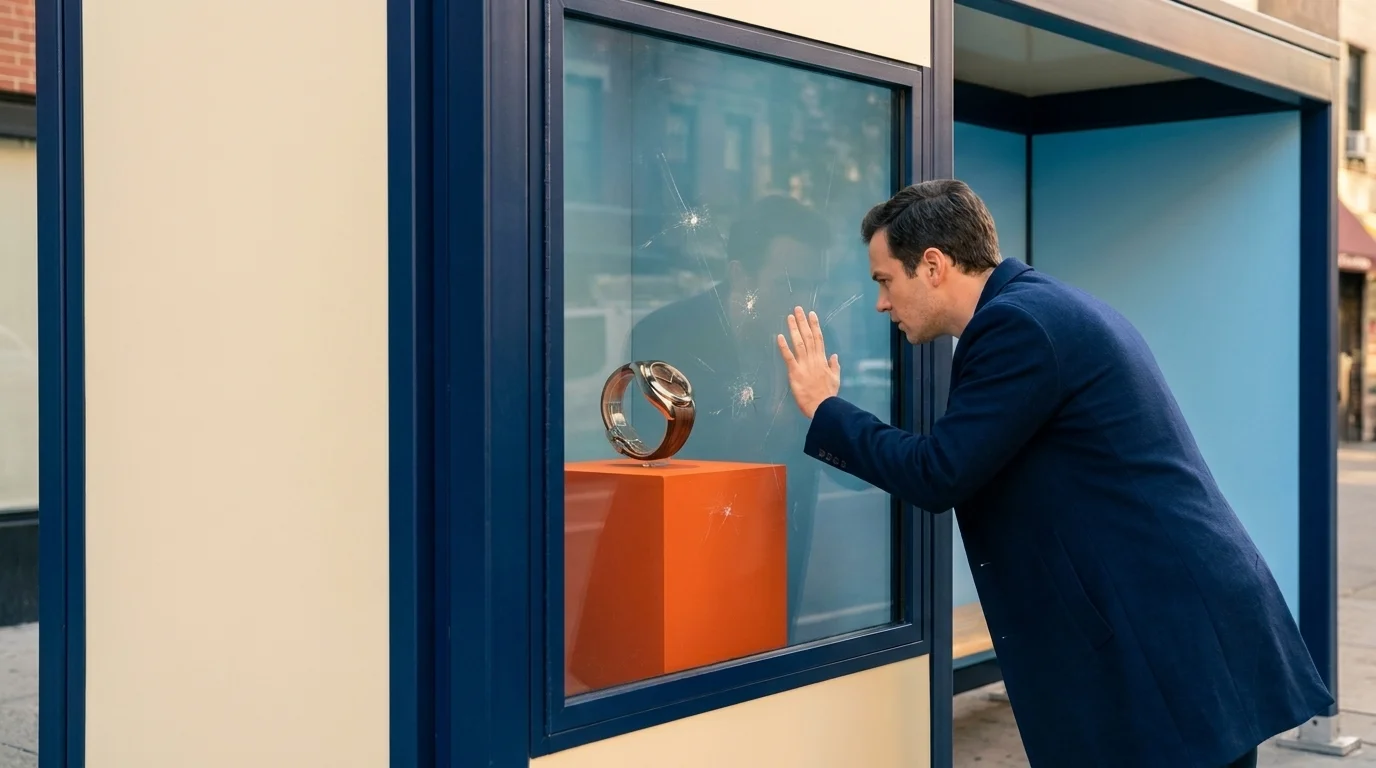
- 3M — bus-stop glass: 3M stacked $3 million behind its own "unbreakable" glass and invited passers-by to kick it loose. The product demonstration was the stunt.
- IKEA — Manhattan apartment / bus-stop rooms: IKEA furnished a real apartment and turned bus stops into showrooms, putting the product directly in the customer's path.
- UNICEF — dirty-water vending machine: a machine that sold bottles of diseased "water" to make an invisible problem visceral, converting a moment of discomfort into a donation.
- Specsavers — parking-ticket stunt: fake tickets reading "should've gone to Specsavers," reactive wit that cost almost nothing and travelled on its own.
- Coca-Cola — Happiness Machine: Coca-Cola's recurring guerrilla approach is experiential — vending machines rigged to over-dispense drinks, flowers, and small surprises, turning a mundane purchase into a shareable moment far larger than the installation's footprint.
- Fiji Water — Fiji Girl: a single model photobombing the Golden Globes red carpet let a water brand own an event it did not run.
- Deadpool & Mous: channel-native surprises — a Deadpool Tinder profile, and phone-case maker Mous staging dramatic phone "drops" — proof that the stunt should fit the platform it lands on.
The Earned-Media Math Behind Guerrilla Marketing
Why does any of this travel? Four mechanics, and they are worth naming because they tell you which stunts are worth attempting: surprise (the pattern-interrupt that stops a scroll or a step), social proof (other people reacting, which invites you to react too), shareability (a moment built to be passed on), and earned-media math (the reason a small spend can buy a large reach).
That last one is where the industry keeps getting sloppy. Word-of-mouth is trusted by around 92% of consumers over other forms of advertising, and it has been estimated to drive roughly $6.50 in value for every $1 spent — but read those as the mechanism, not as a forecast for your campaign.
Here is where I have to be a killjoy. You will see it claimed everywhere that guerrilla marketing delivers a "4.5–5× ROI" and is "90% more memorable" than traditional advertising. I went looking for the primary source behind those figures and, like the analysts at Minneapolis Made, I could not find one. Treat them as widely repeated and unsourced, and do not put them in a deck with your name on it. Use named numbers instead: Whopper Detour's reported 37:1, Blendtec's six million views on fifty dollars, Duolingo's 1.7 billion impressions in two weeks. This is the same discipline I would apply to any sustainability claim — a number is only as good as the standard behind it. Measure earned reach, social mentions, and cost-per-impression against paid CPM, and be suspicious of any single blended multiple that arrives without an attribution model attached.
How to Run a Low-Waste Guerrilla Campaign on Under $500
You do not need A24's budget. You need one sharp idea and the right corner. Here is how a small team runs a credible campaign for less than the cost of a week of paid social.
A <$500 playbook
Spend on the idea and the location, not on the media. Graza-style QR flyers cost pennies and route straight to a sign-up. Sidewalk chalk and stencils turn public ground into a canvas. A short projection onto a wall replaces a printed billboard, with nothing left to recycle. A well-placed sticker run and a single reusable experiential prop can carry the rest. One caution the how-to guides skip, and that I will not, having read enough regulatory small print to know better: check the public-space and permitting rules before you install anything. A stunt that gets you fined or removed is not thrift — it is a liability with your logo on it.
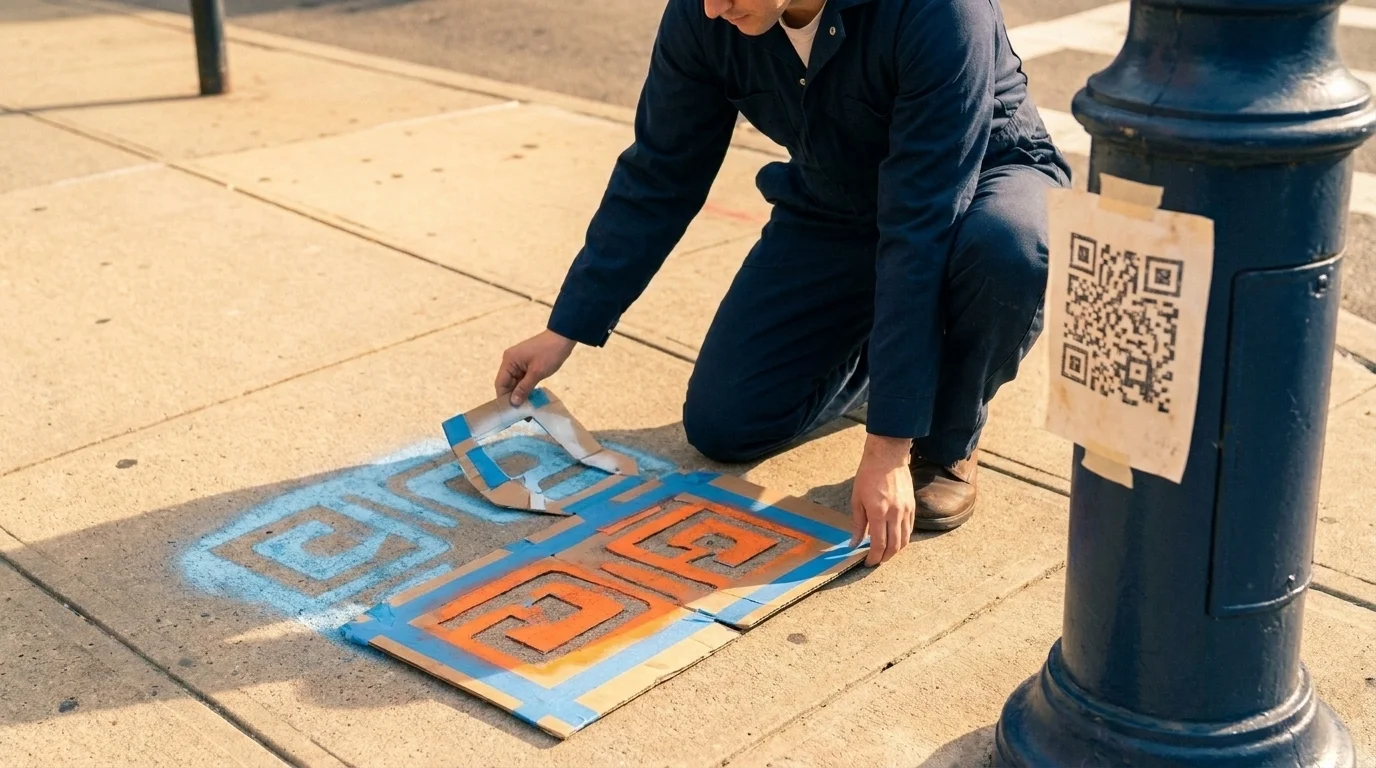
Low-waste by design
Design the campaign so there is little to throw away. Favour reusable installations over single-print runs, digital projection over disposable out-of-home, and an experiential moment over a stack of handouts destined for a bin. Tony's Chocolonely routed its surprise through a charity; Graza's whole mechanic was a piece of paper and a QR code. The rule of thumb is the one this piece has been arguing throughout: the lowest-footprint idea is often the most memorable, because restraint forces the invention into the concept rather than the production. For more of this thinking, the sustainable marketing category is where it lives.
Ambient Marketing and AR: What's Next in 2026
Ambient marketing is guerrilla woven so far into the environment that it stops looking like advertising at all — street furniture, packaging, the side of a building, a digital layer over a poster. It is the one genuinely rising neighbour of this category: search interest has been climbing sharply while the rest of the topic holds steady. The frontier is AR-native — scannable packaging and augmented-reality street posters, such as the AR try-on posters trialled around events like York Fashion Week — and it fits the sustainable lane cleanly, because a digital layer adds nothing physical to discard. It is, in other words, the same argument this article opened with, arriving on schedule.
The Takeaway
The guerrilla marketing examples that win in 2026 spend their creativity, not their ad budget — and the lowest-waste ideas are often the most memorable, because a small footprint forces the cleverness into the concept. You do not need a 135-foot blimp; you need one sharp idea, the right corner, and the honesty to measure what a stunt actually earned rather than the multiple everyone quotes. So pick one tactic from the under-$500 playbook, run it small, and count the earned reach yourself. Then put to your own team the question I put to any claim before it ships: if someone asked us to show the source for this number, what would we hand them? Keep exploring the low-budget, high-creativity plays in the sustainable marketing category, and hold every one of them to that standard.
Frequently Asked Questions
Coca-Cola uses experiential guerrilla marketing like its Happiness Machine — vending machines rigged to unexpectedly over-dispense drinks, flowers, and other surprises. The stunt turns a mundane purchase into a shareable moment, generating earned media and word-of-mouth reach far larger than the single installation's small physical footprint.
Yes, guerrilla marketing still works in 2026. Earned-media-driven ideas continue to outperform broadcast-led ones: Duolingo's 2025 mascot stunt drew 1.7 billion impressions in two weeks. The tactics are evolving toward AR and ambient placements, but surprise plus shareability remains a low-cost path to real reach.
A guerrilla marketing campaign can cost almost nothing. Blendtec's Will It Blend earned 6 million views on a $50 production budget. A small team can run a credible campaign on under $500 by spending on the idea and the location rather than on paid media, then measuring earned reach honestly.
Measure guerrilla marketing ROI by tracking earned reach, social mentions, and cost-per-impression against paid CPM — not a single blended multiple. Ignore the unsourced 4.5x average that circulates online and benchmark instead against named, attributable campaigns, such as Whopper Detour's reported 37:1 return.
Not quite. Ambient marketing is a subtype of guerrilla marketing that blends the message into the environment itself — street furniture, packaging, AR posters — rather than staging a one-off stunt. All ambient marketing is guerrilla marketing, but not all guerrilla marketing is ambient.