Motivation And Technology


The pitch is always the same: install this app and your motivation problem is solved. The streak keeps you honest, the tracker makes the goal real, the AI coach nudges you at the right moment. I have shipped enough of these features to know the pitch is half true, which is the most dangerous kind of true. The honest story of motivation and technology is that the tool and the trap are the same device: the phone that helps you hold a hundred-day language streak is the phone burying your focus under notifications. Search the topic and you get paywalled journals and one readable trade article old enough to vote — none tells you both halves in plain English. This guide does: how technology genuinely fuels your drive, how it quietly drains it, what the newest research says about why, and how to set your tools up so the fuel wins.
How Does Technology Affect Motivation?
Technology affects motivation in both directions: the same tools — data tracking, gamification, social media, and AI feedback — can fuel your drive or quietly drain it, depending on how they are built and how you use them.
That two-way answer sounds like a hedge; it is actually the whole finding. The framing that owns page one — "is technology good or bad for motivation" — is the wrong question, about as useful as asking whether a kitchen knife is good or bad. It depends what you do with it, and how sharp the handle is.
The most credible current map comes from Kaitlin Woolley's 2026 synthesis in Consumer Psychology Review — worth naming because it is peer-reviewed and was published after every article currently ranking for this topic. Woolley's model takes four technology functionalities — data tracking, gamification, social media, and AI-powered dynamic feedback — and shows each one cuts both ways, grouping the helpful mechanisms under an acronym she calls GAINS and the harmful ones under DRAINs. The detail I would flag for anyone who last read about this a few years ago: AI coaches are now a first-class actor here, not a footnote. The thing recommending your next workout is the same category of tool as the step counter.
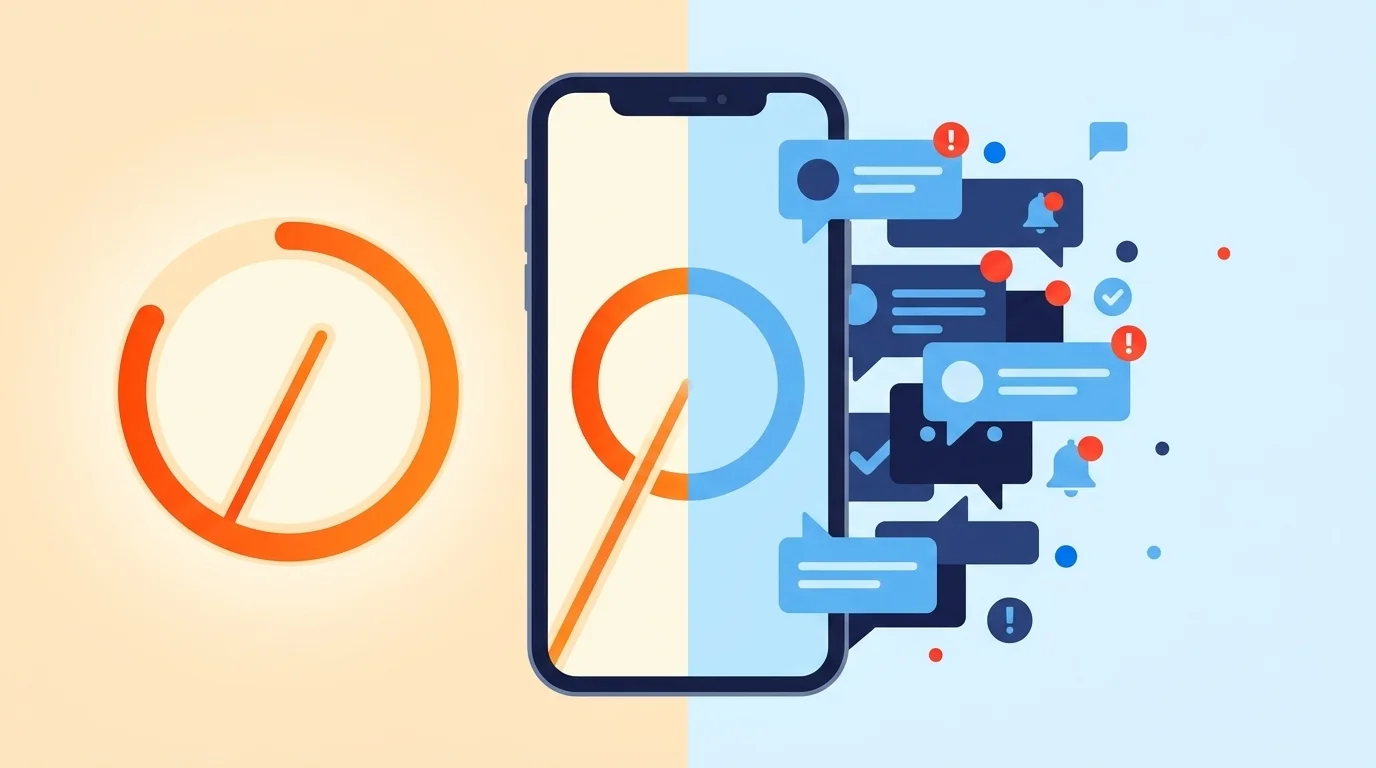
The next two sections take that split one at a time, each mechanism tied to a real 2026 app, because a mechanism you cannot point at is just a vibe. Keep one test in mind throughout, borrowed from how I judge any product: it is easy to make an app feel motivating for a week — the only question that counts is whether the behaviour survives its second week.
The Five Ways Technology Fuels Motivation (Woolley's GAINS)
When technology helps, it tends to help through five specific mechanisms. Woolley's GAINS is a tidy way to remember them, and each maps to a tool you have probably already used.
G — Goal clarity. A tracker turns an abstract intention into a number you can see. "Get fitter" is a wish; a weekly minutes-of-movement figure is a target. The same move works for money (an expense tracker turning "save more" into a running total) or study (words learned, sessions logged). It is the least glamorous of the five and probably the most reliable.
A — Action-intention. This is the gap most goals die in — you want the thing, you just never start today. Streaks, reminders, and calendar nudges convert intention into a specific next action at a specific time. A daily-streak language app or a Pomodoro timer like Focus To-Do teaches you nothing profound; it answers the only question that stops most people: "what do I do right now."
I — Intrinsic enjoyment. Good gamification makes a dull task fun in itself rather than bribing you through it. Forest grows a virtual tree while you leave your phone alone; Habitica turns chores into role-playing-game quests. The point is not the reward at the end but that the doing becomes mildly enjoyable — the only version of motivation that lasts once nobody is watching.
N — New information. AI coaches and dynamic feedback surface patterns you could not compute yourself: that you always skip Thursdays, that your best focus block is before 10am, that your spending spikes the day after payday. Used honestly, it is the most genuinely new capability here, and the one none of the older writing accounts for.
S — Support. Social features supply accountability — a shared goal, a friend who sees your streak, a community pulling the same direction. This is the constructive face of the same social media that shows up in the next section as a problem: same feature, opposite outcome.
Notice the pattern: every GAIN works by making the goal clearer, the next step smaller, or the doing more pleasant. Nothing here is magic. It is design.
The Five Ways Technology Drains Motivation (Woolley's DRAINs)
Now the honest half, the one the academic search results mostly skip. The same four technologies, running in reverse, are what Woolley files under DRAINs.
D — Distraction. Notifications and infinite feeds fragment attention and pull you off the task you opened the phone to do. You went in to log a workout and left forty minutes later having logged nothing. The feed is engineered to win that exchange, and usually does.
R — Reward misalignment. Points and badges reward the app's engagement metric, not your goal. You optimise the game instead of the outcome — grinding a streak on the easiest lesson to keep the number alive, which flatters the app's retention chart and does nothing for your Spanish. When reward and goal quietly diverge, the reward wins, because it is the thing on the screen.
A — Action avoidance. Tracking can trigger the opposite of action once the numbers look bad. You had a lazy week, you know the fitness app will show it, so you stop opening it. The tool built to hold you accountable becomes the thing you hide from.
I — Information overload. More data is not always more clarity. Past a point, dashboards, scores, and streams of feedback produce paralysis rather than direction — you spend the energy you had for the task on deciding which metric to care about.
N — Negative self-efficacy. This is the quiet one and the most corrosive. Social comparison and streak-breaking guilt chip away at the belief that you can actually do the thing. A broken hundred-day streak should be a neutral event; the app makes it feel like a verdict. Over time, "I failed at the app" gets filed as "I am the kind of person who fails at this."
The unifying failure mode, and the thing the 2026 digital-wellbeing writing keeps landing on, is that the dopamine hit fades and the underlying habit was never built. Novelty-driven apps feel electric in week one and inert by week three — which is exactly why the second-week test matters.
How Motivation Actually Works: Types and the 6 C's
Motivation is the internal push that gets you to start a task and keep going, and it comes in more than one flavour. Before you can judge whether a tool is fuelling or draining it, you need the plain version of how it works — scattered, annoyingly, across three separate pages that each own one framework. Here they are in one place. Our digital lifestyle guides pick up the practical thread afterwards.
Intrinsic vs. Extrinsic Motivation (the 4 Types)
The core split is two types: intrinsic motivation, where you do something for its own satisfaction, and extrinsic motivation, where you do it for a reward or to avoid a penalty. Self-determination theory splits the extrinsic side into a continuum — external (pure pressure or bribe), introjected (guilt and ego), and identified (you have accepted the goal as genuinely yours) — which is where the commonly cited "four types of motivation" comes from. The practical upshot: rewards that stay purely external tend to stop working the moment the reward stops. The kinds that last are the ones that drift toward "I actually want this," and the best tools are the ones that help you make that drift.
Self-Determination Theory: Autonomy, Competence, Relatedness
Self-determination theory argues that motivation is fed by three psychological needs: autonomy (I chose this), competence (I am getting better at it), and relatedness (I am doing it alongside people I care about). This is the most useful lens for judging an app, because it predicts which ones will hold you. A tool that supports autonomy — you set the goal, you set the pace — tends to motivate. A tool that controls, surveils, or shames you might spike a metric this week but starves the need that keeps you coming back. Hold this framework next to the GAINS list and you will see the good mechanisms are the ones feeding one of these three needs.
The 6 C's of Motivation
A framework popularised in Human Kinetics' coaching literature lists six conditions that make an activity motivating: control, challenge, curiosity, creativity, constant feedback, and competition. It is a useful checklist precisely because it is concrete. Notice how neatly each C maps onto a tech mechanic from the GAINS section: control is autonomy over your settings, challenge and curiosity are what a well-designed quest supplies, constant feedback is the tracker, competition is the leaderboard. When an app motivates you, it is usually because it is quietly ticking several of these boxes. When it drains you, it has swapped one of them — competition curdling into comparison, feedback multiplying into overload.
Gamification, Dopamine, and the Apps Built on Your Motivation
Here is where I put a number on it, because everything above is mechanism and mechanism is easy to assert. The Wharton Neuroscience Initiative reports gamification can drive roughly a 15% productivity increase, tying the effect to dopamine release in the brain's reward system and, more usefully, to the fact that good gamification "fosters autonomy, mastery, and achievement" — the same three needs from the last section in a different coat. Fifteen percent is a real, respectable, non-magical figure, landing (it cites Gerdenitsch and colleagues, 2020) in the register I trust: incremental in the spreadsheet, not revolutionary in the press release.
A whole category of consumer apps is now built on these mechanics, and it is worth naming them rather than gesturing at "gamified productivity apps." Current 2026 roundups feature Habitica, which turns your to-do list into RPG quests with boss fights; Forest, the grow-a-tree focus timer; Fortune City, which builds a city out of your logged expenses; SuperBetter, framed as resilience quests; and Focus To-Do, a Pomodoro timer with a digital garden. Our other digital lifestyle guides go through them tool by tool.
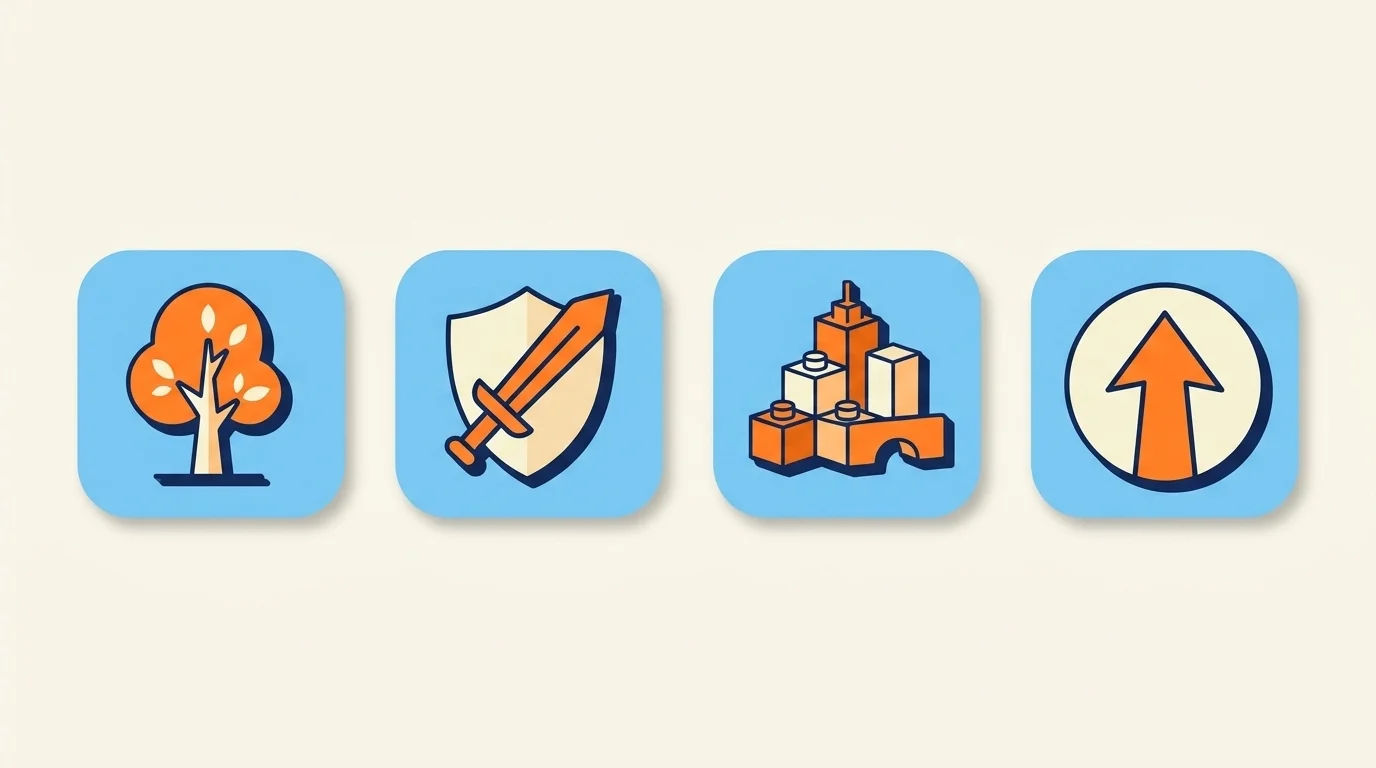
Now the counterweight, the same one the wellbeing researchers keep raising: the dopamine loop is a fast-acting drug with a short half-life. The tree is charming in week one and invisible by week four, because the app trained you to want the animation, not the focus. The apps that survive are built around micro-habits rather than heroic commitments — and here I want to be careful with a figure, because being careless with figures is how this genre goes wrong. One 2026 digital-wellbeing writeup claims micro-habit apps see about 40% higher retention than apps demanding a big immediate commitment. Treat that as directional, not gospel: it traces to a single secondary source citing a study I could not verify, and "40% higher retention" always invites the question of who is counted, over what window. The direction is almost certainly right; the decimal point I would not put in a business case.
Technology and Motivation in the Classroom
If you are here because you are writing an essay or a thesis, this is the section you actually came for — the search data is blunt about it, and most demand for this topic sits in education. So it gets real weight, not a paragraph.
The evidence here is more grounded than the app-store stuff, because schools have been measured for longer. Technology-enhanced learning shows measurable effects on student performance, satisfaction, and motivation, but — and this is the finding that matters — the effect is not about the technology being present. It is about what the technology is asked to do. Meaningful, interest-based, mastery-focused tasks raise motivation. A tablet handed out so the school can say it handed out tablets does not.
The self-determination lens explains why cleanly. Technology that supports a student's autonomy (choice in how they learn), competence (visible progress they can feel), and relatedness (learning with peers, not in isolation) tends to engage. Technology that controls and surveils — lockdown browsers, constant monitoring, points for compliance — tends to backfire, because it starves the exact needs that motivation runs on. The teacher's own orientation toward the tool shapes how students receive it, which is a polite way of saying the device is downstream of the pedagogy.

And the DRAINs do not politely stay out of the classroom. Gamified quizzes and instant-feedback loops genuinely help engagement, right up until the same distraction and reward-misalignment problems arrive — students grinding quiz points instead of understanding, or the group chat winning the attention war against the lesson. The classroom is just the motivation-and-technology relationship with a bell schedule — the same dynamics our digital lifestyle guides track everywhere else.
How to Make Motivation and Technology Work for You (Not Against You)
None of this is a reason to throw your phone in a drawer. It is a reason to set it up on purpose. Turning the GAINS and DRAINs into a handful of moves:
Align the reward to your real goal, not the app's metric. Before you commit to a tool, ask what it actually rewards. If keeping the streak alive is easier than making progress, the streak is the goal now, and you have been played. Pick tools where the cheapest way to score is also the thing you wanted to do.
Use streaks and gamification for micro-habits, not grand commitments. Ten minutes daily beats a heroic Sunday plan, and the retention evidence — hedged as it is — points the same way. Small enough to survive a bad week is the whole design brief.
Mute the DRAINs deliberately. Cut the non-essential notifications, batch your feeds into a window instead of a drip, and switch off the comparison-driven prompts. Autonomy-supporting defaults over controlling ones. You are not weak-willed; you are outnumbered, and the fix is structural.
Treat the app as scaffolding, not the building. No app is the habit. It is a temporary structure that should make the real behaviour easier to stand up, and you should expect to take it down once the behaviour holds on its own. If the behaviour collapses the moment you delete the app, the app was the habit, and that was always going to expire.
So, in the language I actually use to rate things: does technology motivate? On the honest evidence, yes — but only once you stop being sold the tool and start using it for the outcome. What I would run this month: pick one goal, one app, turn off every notification it does not strictly need, and see whether the behaviour is still there in two weeks without the app nagging. If it is, keep the tool. If it is not, you learned something cheaper than a year of streaks.
Motivation and technology were never going to be a story of one beating the other. It is a story about which one you set up to win: pick the GAINS, mute the DRAINs, and point every reward at the goal you actually have rather than the one the app is scoring. Do that with a single app this week, then browse the rest of our digital lifestyle guides for the tools worth setting up in the first place.
Frequently Asked Questions
The four types of motivation start from one split: intrinsic (doing something for its own satisfaction) versus extrinsic (doing it for a reward or to avoid a penalty). Self-determination theory then breaks the extrinsic side into a continuum—external pressure, introjected (guilt or ego), and identified (a goal you have genuinely accepted as your own). That continuum is where the commonly cited four types come from.
The 6 C's of motivation are control, challenge, curiosity, creativity, constant feedback, and competition—the conditions, popularised in Human Kinetics' coaching literature, that make an activity engaging enough to stick with. Each maps onto a technology mechanic: control is autonomy over your settings, constant feedback is your tracker, and competition is the leaderboard. When a tool motivates you, it is usually ticking several of these.
The 5 C's of motivation are a related shorthand you will sometimes see instead of the six—a narrower list of the conditions that make an activity motivating. The exact members vary by source, which is why the 5 C's and 6 C's get confused; control, challenge, and curiosity recur in both. Treat them as versions of the same idea, not rival frameworks to memorise.
Yes—technology can reduce motivation as easily as it raises it. Woolley's 2026 DRAINs describe five ways: distraction from notifications and feeds, reward misalignment (you chase the app's points instead of your goal), action avoidance when the numbers look bad, information overload, and lower self-efficacy from constant social comparison. The dopamine hit fades, and the underlying habit was never built.